Best Web
Pentesting Company

Overview of Web Pentesting

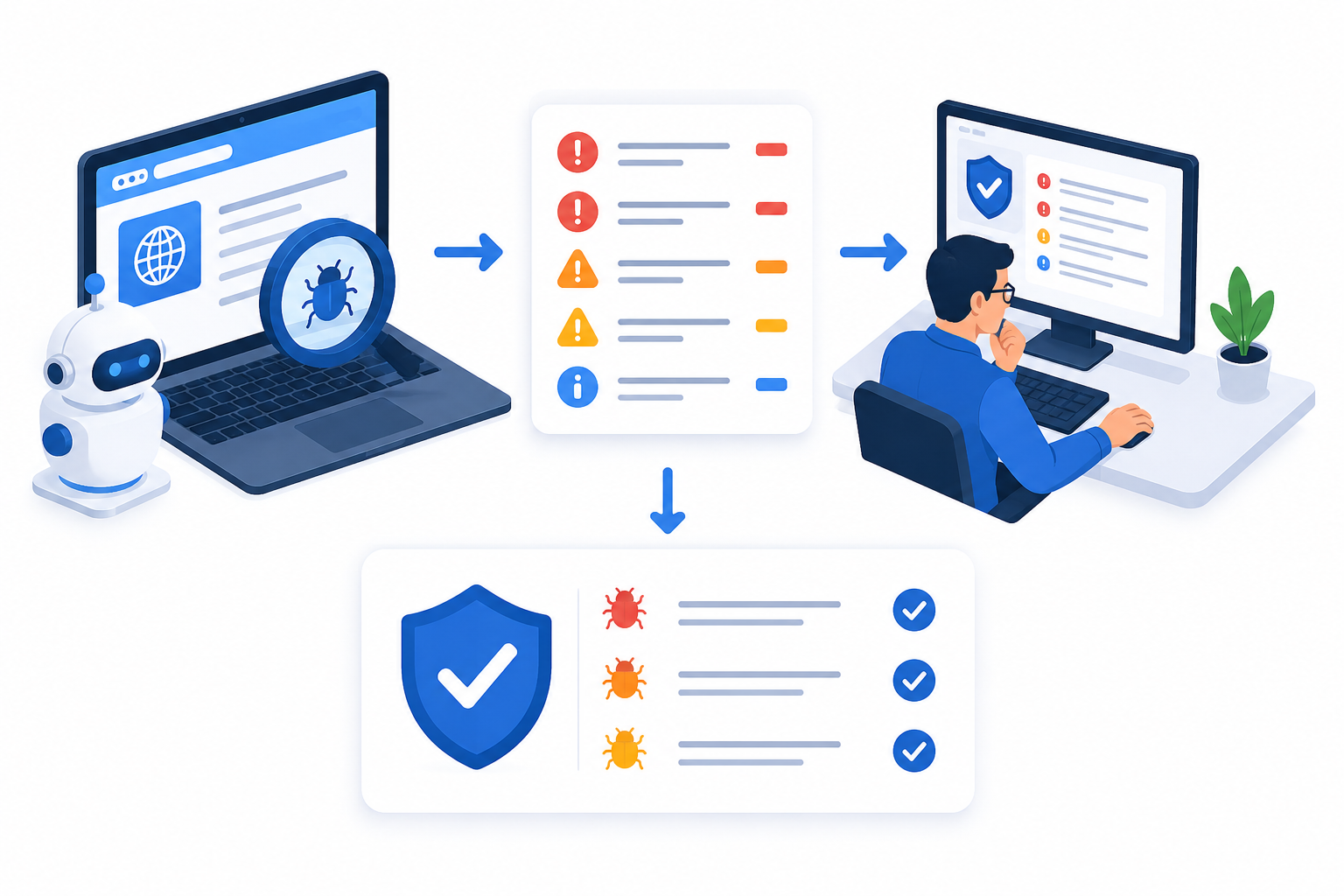
Identifying Vulnerabilities

Web application VAPT plays a critical role in detecting security flaws before they are exploited by attackers. With the increasing reliance on web-based platforms, even a small vulnerability—such as cross-site scripting (XSS) or SQL injection—can lead to serious breaches. According to research by Positive Technologies, over 75% of tested web applications contain vulnerabilities that could compromise sensitive data. VAPT allows organizations to uncover and fix these weaknesses proactively, protecting both data and users.

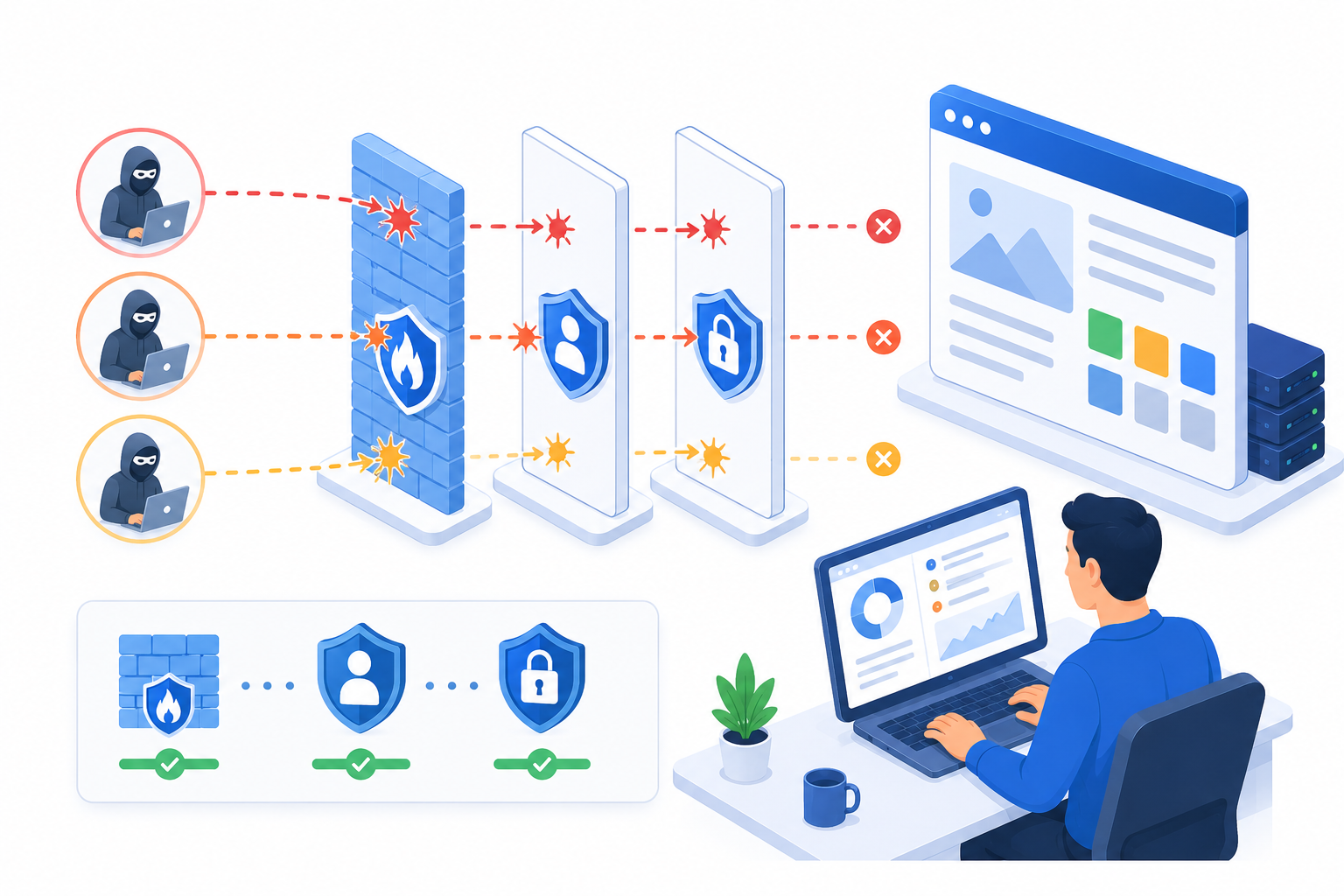
Assessing Security Controls

Web VAPT not only identifies flaws but also evaluates how well existing security mechanisms—like input validation, session management, and access controls—are functioning. Real-world attack simulations test the application’s ability to detect and block threats. A report by the SANS Institute noted that many breaches occur due to weak or misconfigured application-layer defenses. Through thorough testing, VAPT helps strengthen these controls and enhances an organization’s ability to detect and respond to attacks in real time.

Compliance Requirements

Regular web application pentesting is a requirement in many regulatory standards and frameworks. For example, PCI DSS, HIPAA, and ISO 27001 all emphasize the need for continuous vulnerability assessments and penetration testing to ensure data protection. Performing Web VAPT not only ensures compliance with these standards but also demonstrates a commitment to security best practices—helping organizations avoid penalties, legal issues, and reputational damage associated with data breaches.

What are the features of Web Pentest?

Web application VAPT (Vulnerability Assessment and Penetration Testing) is a vital part of a modern cybersecurity strategy, focusing on identifying and mitigating vulnerabilities within web-based applications. As organizations increasingly rely on web platforms for business operations, customer engagement, and data handling, the need for securing these digital assets is more critical than ever. Web VAPT involves simulating real-world attacks to test the application’s security controls, uncover flaws, and provide actionable insights to enhance protection. Here are some key features of web application pentesting:

1. Comprehensive Assessment :

Valency Networks has established a proven track record of delivering exceptional network security services to clients across various industries. Our team of seasoned cybersecurity professionals brings extensive experience and expertise to every engagement, ensuring the highest quality of service and results that exceed client expectations.

1. Comprehensive Assessment
2. Real-World Simulation
3. Vulnerability Identification
4. Risk Assessment
5. Actionable Recommendations
6. Compliance and Regulatory Support
7. Continuous Improvement

Web application VAPT offers organizations a realistic and comprehensive understanding of their application security posture. It helps uncover hidden threats, validate security controls, and build stronger defenses against ever-evolving cyber threats. By partnering with experienced providers like Valency Networks, organizations gain access to proven expertise, cutting-edge methodologies, and lasting security improvements for their digital platforms.

How Expert Web VAPT Companies
Solve the Problem

At Valency Networks, our Web Application Vulnerability Assessment and Penetration Testing (VAPT) process is designed to provide comprehensive, precise, and actionable insights that help safeguard your web applications from evolving cyber threats. Here’s how expert web VAPT companies effectively address the challenges of web application security:

1. Specialized Expertise

Expert web VAPT companies employ cybersecurity professionals with deep knowledge of web technologies, frameworks, and common vulnerabilities such as SQL injection, cross-site scripting (XSS), and authentication flaws. Their experience across diverse web environments enables them to uncover both obvious and subtle security weaknesses.

2. Advanced Tools and Techniques

Top-tier companies combine automated scanning tools with manual testing techniques to thoroughly probe web applications. They use vulnerability scanners, proxy tools, custom scripts, and real-world attack simulations to identify security gaps that might otherwise go unnoticed, including complex business logic vulnerabilities.

3. Comprehensive Analysis and Reporting

Expert providers deliver detailed, easy-to-understand reports that prioritize vulnerabilities based on risk and business impact. These reports include clear remediation steps and security best practices, helping clients efficiently address critical issues while enhancing overall security posture.

4. Continuous Support and Guidance

Leading web VAPT companies offer ongoing support beyond the initial testing. They assist in remediation validation, provide secure coding recommendations, and advise on security improvements to ensure that defenses remain strong as web applications evolve.

Web application security is crucial for protecting sensitive data, maintaining user trust, and ensuring business continuity. Expert web VAPT companies like Valency Networks address these challenges by delivering specialized knowledge, advanced testing methodologies, detailed insights, and continuous guidance. Partnering with experts empowers organizations to secure their web applications effectively against modern cyber threats.

Web VAPT Methodologies

Web Application Pentesting Methodologies define the strategic approach and best practices used to evaluate the security of your web applications comprehensively. At Valency Networks, we follow industry-recognized methodologies to simulate real-world cyber attacks and uncover vulnerabilities that could compromise your application.

Our methodologies are based on proven frameworks such as the OWASP Testing Guide and the Penetration Testing Execution Standard (PTES). These guide us in testing all aspects of your web application—from input validation and authentication mechanisms to session management and business logic. We combine automated scanning with manual techniques to identify complex security flaws like SQL injection, Cross-Site Scripting (XSS), Cross-Site Request Forgery (CSRF), and more.

By adhering to these methodologies, we ensure a systematic, thorough, and repeatable testing process that covers every possible attack vector. This strategic approach helps organizations understand the full scope of their application’s security posture and prioritize remediation efforts effectively.

Key focus areas in our methodologies include:

Comprehensive Reconnaissance

Understanding the application’s structure, technologies, and threat landscape.

Vulnerability Identification

Systematic detection of security weaknesses using both automated tools and manual techniques.

Realistic Exploitation

Simulating attacks to assess potential impacts without disrupting business operations.

Risk Prioritization

Classifying vulnerabilities based on severity and business impact for effective remediation.

Continuous Improvement

Offering retesting and guidance to ensure security evolves with your application.

Reporting and Remediation:

Providing clear, detailed reports and working closely with your development and security teams to ensure effective understanding and timely remediation of identified vulnerabilities.

What are various stages of Web VAPT ?

1. Scope Definition and Planning

The process begins with detailed discussions to define the scope, objectives, and boundaries of the test. We identify the web applications, APIs, and related components to be tested, understand business criticality, and establish rules of engagement to ensure safe and authorized testing.

2. Information Gathering and Reconnaissance

In this stage, we collect as much information as possible about the target application. This includes mapping out URLs, input fields, authentication mechanisms, third-party integrations, and underlying technologies. Both passive and active reconnaissance techniques are used to identify potential entry points and attack surfaces.

3. Vulnerability Assessment

Using a combination of automated tools and manual techniques, we scan the application for known vulnerabilities such as SQL injection, Cross-Site Scripting (XSS), Cross-Site Request Forgery (CSRF), insecure direct object references, and authentication flaws. This phase helps detect weaknesses that could be exploited by attackers.

4. Exploitation and Penetration Testing

Once vulnerabilities are identified, our testers simulate real-world attacks to exploit these weaknesses safely. This phase helps assess the potential impact and confirms whether the vulnerabilities can be used to gain unauthorized access, escalate privileges, or extract sensitive data.

5. Reporting

We deliver a detailed, easy-to-understand report that summarizes findings, risk levels, and actionable remediation recommendations. Our reports are tailored to technical teams for implementation and to management for informed decision-making.

6. Remediation Support and Retesting

Security is an ongoing process. We assist clients in fixing identified vulnerabilities and offer retesting services to verify that issues have been resolved effectively, ensuring continuous improvement in application security.

By following these stages, Valency Networks ensures your web applications are rigorously tested, risks are clearly understood, and your security posture is strengthened against evolving cyber threats.

Tools Used by Top Web Application Pentesting Companies

As a leading web application vulnerability assessment and penetration testing company, Valency Networks leverages a diverse and advanced set of tools and technologies to conduct thorough evaluations, ensuring the identification and remediation of security weaknesses within your web applications. Let’s explore the key tools utilized by top web application pentesting companies like Valency Networks:

By combining these advanced tools with expert manual testing and comprehensive methodologies, Valency Networks ensures your web applications are rigorously tested against the latest threats. This multi-faceted approach helps uncover vulnerabilities early, enabling proactive remediation and strengthening your overall security posture.

Difference between Black box, Gray box, and white box Web VAPT

Web application penetration testing can be categorized into three main approaches based on the level of knowledge and access testers have to the target system and its internal workings. These categories are often referred to as "Black Box," "Gray Box," and "White Box" testing. Here's a breakdown of the differences between these approaches in the context of web penetration testing:

Black Box Testing:
  • Knowledge: Testers have no prior knowledge of the web application, its architecture, or its source code. They approach the application as external, unauthorized attackers would.
  • Access: Testers interact with the application from the perspective of an external user without any special access or credentials.
  • Methodology: Testers rely solely on external observations and information gathering techniques, such as scanning, enumeration, and manual testing. They do not have any insider knowledge.
Gray Box Testing:
  • Knowledge: Testers have partial knowledge of the web application’s architecture, technologies, or source code, but they do not have full access to all details.
  • Access: Testers have limited access and may possess some credentials, but they do not have full administrative or source code access.
  • Methodology: Testers combine external observations with partial internal knowledge to simulate both external and internal threats. This approach allows for more targeted testing.
White Box Testing:
  • Knowledge: Testers have complete knowledge of the web application’s architecture, technologies, source code, and internal workings.
  • Access: Testers often have access to the source code, database, and administrative privileges to the web application, making it possible to assess internal components directly.
  • Methodology: Testers can perform in-depth code review, analyze database interactions, and assess security controls from an insider’s perspective.
Black Box Testing
  • Advantages: This approach simulates the perspective of a real-world attacker, helping to identify vulnerabilities that an external attacker might exploit.


  • Disadvantages: It may not uncover certain internal or business logic vulnerabilities, and the testing process may be less efficient since testers lack knowledge of the application’s inner workings.
Grey Box Testing
  • Advantages: Gray box testing strikes a balance between the realism of Black Box testing and the effectiveness of White Box testing. Testers can find vulnerabilities that might be missed in a purely Black Box approach.


  • Disadvantages: Testers may still miss certain vulnerabilities that require deep knowledge of the application, and the level of partial knowledge can vary.
White Box Testing
  • Advantages: White box testing allows for comprehensive analysis of the application’s security controls and business logic. It can uncover deep vulnerabilities and assess the effectiveness of security measures.


  • Disadvantages: This approach might not reflect the perspective of an external attacker accurately, and it can be resource-intensive, requiring specialized knowledge and access.

What should be the frequency of Web VAPT?

At Valency Networks, we emphasize a proactive approach to web application security through regular and consistent Web Vulnerability Assessment and Penetration Testing (Web VAPT) engagements. The ideal frequency of Web VAPT depends on multiple factors including the industry regulations you must comply with, the sensitivity of your applications, your organization’s risk appetite, and the speed at which your web applications evolve.

As a best practice, we recommend conducting comprehensive Web VAPT at least annually to stay ahead of emerging threats, identify new vulnerabilities, and verify the robustness of your security controls.

In addition to annual assessments, here are key scenarios when more frequent Web VAPT should be considered:

1. After Major Application Updates or Deployments

Whenever significant changes are made to your web applications—such as adding new features, updating software components, or deploying new APIs—it’s essential to perform a VAPT to ensure these changes have not introduced new security weaknesses.

2. Following Security Incidents or Breaches

If your application experiences a security breach or suspicious activity, conducting an immediate Web VAPT helps identify the root cause, assess the extent of the compromise, and implement effective remediation to prevent recurrence.

3. Prior to Critical Events or Compliance Audits

Before product launches, regulatory audits, or business mergers, performing Web VAPT ensures your applications meet security and compliance requirements and reduces risks during these high-stakes periods.

4. Continuous or Periodic Testing for High-Risk Environments

For organizations with highly sensitive data or those operating in rapidly changing environments, continuous or more frequent VAPT cycles combined with automated scanning and monitoring can provide real-time detection of vulnerabilities and swift risk mitigation.

By adopting a structured and ongoing Web VAPT strategy, organizations can significantly reduce the risk of exploitation, protect customer data, and maintain trust in their digital services. At Valency Networks, we partner with you to develop tailored Web VAPT schedules aligned with your business needs and security goals, ensuring your applications remain resilient against evolving cyber threats.

What are the different Web
Pentesting Techniques?

Web application penetration testing (Web VAPT) employs a variety of techniques designed to evaluate the security posture of web applications, identify vulnerabilities, and simulate real-world cyber attacks. These techniques help organizations uncover weaknesses before attackers can exploit them, ensuring stronger, more secure applications. Here are some common web application pentesting techniques:

1. Input Validation Testing

This technique involves testing how the application handles various inputs, including unexpected or malicious data. It helps identify vulnerabilities such as SQL injection, Cross-Site Scripting (XSS), and command injection by ensuring user inputs are properly sanitized and validated.

2. Authentication Testing

Pentesters assess the robustness of the authentication mechanisms used by the web application, including login processes, password policies, multi-factor authentication, and session management. Weaknesses here can lead to unauthorized access or session hijacking.

3. Authorization Testing

This technique verifies whether users can access only the resources and functions they are authorized to use. It identifies flaws like privilege escalation, horizontal and vertical access control issues.

4. Session Management Testing

Session management testing evaluates how sessions are created, maintained, and terminated. It looks for vulnerabilities like session fixation, session hijacking, and insecure cookie attributes that attackers could exploit to impersonate users.

5. Business Logic Testing

Pentesters analyze the application’s business logic to identify flaws that automated tools often miss. This includes testing workflow bypasses, improper error handling, and transaction manipulation that could lead to unauthorized benefits or data exposure.

6. File Upload Testing

This technique checks how the application handles file uploads, ensuring attackers cannot upload malicious files that could lead to remote code execution or defacement.

7. Error Handling and Information Disclosure Testing

Pentesters evaluate how the application manages errors and whether it inadvertently reveals sensitive information through error messages or debug data, which could aid attackers.

8. Cross-Site Request Forgery (CSRF) Testing

CSRF testing checks if the application properly validates requests to prevent unauthorized commands being executed on behalf of authenticated users, protecting against malicious request forgery.

Prashant Phatak

Founder & CEO, Valency Networks

Prashant Phatak is an accomplished leader in the field of IT and Cyber Security. He is Founder and C-level executive of his own firm Valency Networks. Prashant specializes in Vulnerability assessment and penetration testing (VAPT) of Web, Networks, Mobile Apps, Cloud apps, IoT and OT networks. He is also a certified lead auditor for ISO27001 and ISO22301 compliance.As an proven problem solver, Prashant's expertise is in the field of end to end IT and Cyber security consultancy to various industry sectors.

Table of Contents